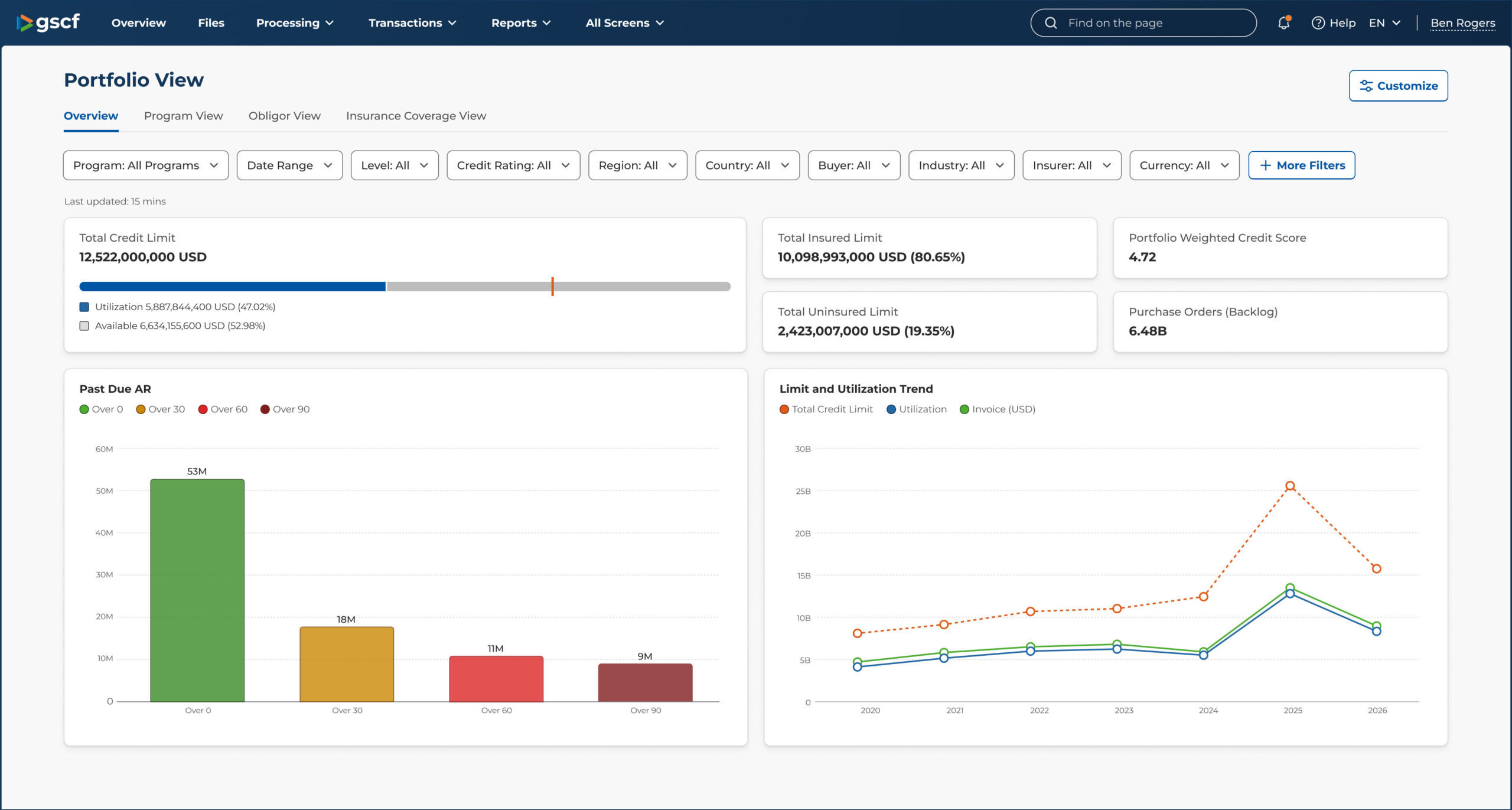
Tag: C4

  • Simplifying Cross-Border Channel Finance for a Global Supplier​

    Simplifying Cross-Border Channel Finance for a Global Supplier​

    The Challenge

    A major European supplier approaches a Tier-1 bank looking to finance their channel across multiple countries — Portugal, France, Germany, Spain and the Nordic region. The supplier wants to expand across multiple currencies (EUR, GBP, USD, SEK) and activate multiple programs simultaneously.​

    The bank sees the opportunity but faces a structural constraint: the contractual relationship sits in the US (US entities, US bank center), but operations must run from Europe. This mismatch creates friction. The European operating unit does not want to take on the operational burden without the integration infrastructure to support it. The bank also needs C4’s channel financing expertise to enter this market confidently.​

    How C4: Connected Capital Control Center Delivers​

    C4 builds a seamless integration into the bank’s loan platform, including loan creation, clearing, cash entries, accounting entries, interest approvals, trial balances, daily cash clearing and outstanding payment reporting. Everything feeds into their regulatory systems at the right operational level.​

    This integration enables the bank to activate not one program, but five simultaneously acrossmultiple currencies and participating banks – all managed within C4’s portfolio layer.​

    The Portfolio Strength​

    Multiple currencies. Multiple participating banks. Multiple vendor entities. Multiple programs running in parallel. C4 handles concentration checks across all buyer exposures, manages participant bank onboarding and offboarding, and delivers monthly and quarterly reconciliations to zero decimals – fully automated, no manual intervention.​

    Clearing audits, reconciliation and cash management happen seamlessly. Regulatory reportingfeeds directly into the bank’s systems at the right governance level. The bank gets portfolio-levelvisibility and control they could not have built internally.​

    The Results ​

    The bank enters channel finance confidently, scales to five programs across multiple currencies and participating banks and eliminates the operational friction that nearly stopped the deal. C4’s integration and portfolio management capabilities make it possible.​

    Explore C4

    Talk to an Expert

  • Tier 1 Bank: A Scalable, Automated Operating Model for Receivables​

    Tier 1 Bank: A Scalable, Automated Operating Model for Receivables​

    Overview​

    • Program:  Accounts receivable purchase — multi-client ​
    • Structure: Self-serve, low-touch operating model with end-to-end automation​
    • Complexity: Multi-client scale, embedded controls, competitive pricing, full audit trail​

    The Challenge

    A leading European Tier 1 bank operating in the U.S. needs to run and scale receivables purchase programs across multiple corporate clients while competing against Tier 1 U.S. banks. They have outgrown an incumbent provider that offers competitive costs but cannot keep pace on integration, structural complexity or service quality.​

    The bank needs to industrialize a repeatable operating model. One that can absorb program complexity and serve clients at the integration level they expect without adding internal headcount or compromising governance.​

    How C4: Connected Capital Control Center Delivers​

    GSCF’s C4 replaces the incumbent with an operating model and platform built to scale. Key capabilities deployed include:​

    • A self-serve, low-touch model powered by hands-free, end-to-end automation — eliminating manual touchpoints without sacrificing control.​
    • Embedded controls across the full lifecycle: validation, limits and alerts, reconciliations and reporting — with a complete audit trail at every step.​
    • Scalable servicing that absorbs structural complexity program by program, while the bank retains governance and full client ownership.​
    • Competitive pricing that removes the trade-off the bank had accepted with the previous provider.​

    The Results

    The bank gains an operating model built for scale, not just a platform upgrade. New client programs are onboarded within an established framework. Complexity stays with GSCF, not the bank’s internal teams. Governance remains firmly with the bank.​

    Explore C4

    Talk to an Expert

  • Banks: Capturing the Mid-Market Through Receivables ​

    Banks: Capturing the Mid-Market Through Receivables ​

    The Challenge

    A Tier-1 bank wants to capture the mid-market before competitors do. Their commercial banking client list is large, the demand is real and the window is narrow. But internal technology bottlenecks and integration constraints mean they cannot activate receivables programs at the speed or volume the market requires. ​

    How C4: Connected Capital Control Center Delivers

    Integration Gap

    ERP-agnostic integration means the bank can onboard suppliers regardless of their internal systems, removing the single biggest adoption barrier in the mid-market.​

    Credit and Visibility Gap

    As programs multiply, GSCF manages each within its own compartment — operationally autonomous and fully governed. Concentration checks run across the entire portfolio. A single umbrella insurance policy governs multiple supplier programs, with all coverage consolidated under one insurer relationship and one portfolio view — regardless of how many programs are active.​

    Adoption Gap

    Program limits are fully utilized and expanded as adoption grows. Frequent funding activity and rapid ramp-up confirm that suppliers and buyers find the platform straightforward to use.

    The Results

    The bank enters the mid-market confidently, activates multiple programs simultaneously and scales without adding internal headcount or infrastructure. GSCF absorbs the operational complexity, enabling the bank to capture market share.

    Explore C4

    Talk to an Expert

  • Portfolio-Level Transparency for Global Treasury​

    Portfolio-Level Transparency for Global Treasury​

    Overview​

    • Program:  Multi-funder working capital program for global treasury​
    • Client:  Large multinational distributor ​
    • Structure:  Funder-neutral servicing platform with centralized control​
    • Complexity:  Multiple buyers, banks and non-bank funders across global jurisdictions​

    The Challenge

    A multinational enterprise operating across a fragmented global funding environment needs to balance liquidity, pricing and funding flexibility across multiple working capital programs without increasing operational burden, delays or compliance risk.​

    As funding relationships expand across banks, non-bank funders and regions, treasury visibility becomes increasingly fragmented. Funding decisions rely on disconnected systems, spreadsheets and periodic reconciliations, limiting the ability to evaluate liquidity, pricing and exposure across the portfolio in real-time.​

    The operating model is no longer built for the scale and structural complexity the business has grown into.​

    How C4: Connected Capital Control Center Delivers​

    GSCF deploys two integrated components that give Treasury centralized control withoutrebuilding their internal infrastructure.​

    1.  One Fully Integrated Platform with Portfolio-Level Visibility 

    A purpose-built workflow that gives Treasury centralized oversight and control across all workingcapital programs:​

    • Approve and route funding requests through one platform​
    • Optimize capital efficiency with consolidated visibility into usage, availability and cost​
    • Make faster, data-driven decisions with real-time program and pricing views​
    • Reduce manual consolidation and reporting​

    2. Funder-Neutral Servicing Platform

    A single operational layer connecting the enterprise to buyers, banks and non-bank funders globally:​

    • One access point for all programs: connect once to operate across multiple buyers, banks andfunders​
    • Standardized workflows across jurisdictions: consistent processing across countries, currencies andlocal requirements​
    • Faster payments, less administration: streamlined submission, validation and approvals reduce delays and rework​
    • Format and protocol flexibility: EDI/CSV/XML and API/AS2/SFTP/web upload, with built-innormalization across ERP systems​
    • Built-in, customizable compliance and validation: program and funder specific rules to reducerejects and exceptions​
    • Full visibility and tracking: real-time status across programs with audit trails and reporting​
    • Bank and funder flexibility without disruption: add or switch funders with minimal operational change​

    How the Relationship Evolves​

    As funding structures and regional complexity expand, C4 becomes the connective operational layeracross the enterprise’s broader working capital ecosystem.​

    Treasury gains dynamic visibility into liquidity, pricing and exposure across funding sources while regional teams continue operating within established local workflows. The operating model scales globally without requiring proportional increases in operational overhead.​

    The Results ​

    Treasury gains the visibility and flexibility needed to manage working capital as a connected global portfolio rather than individual, disconnected programs.​

    • Centralizes visibility across funding structures, pricing and liquidity​
    • Faster funding decisions supported by real-time portfolio insight​
    • Reduces operational friction and manual reconciliation​
    • Greater flexibility to add or transition funding partners​
    • Scalable global infrastructure without increasing operational complexity​

    Explore C4

    Talk to an Expert

  • Alternative Capital in Working Capital and Trade Finance: Opportunity, Risk and the Infrastructure That Makes It Work 

    Alternative Capital in Working Capital and Trade Finance: Opportunity, Risk and the Infrastructure That Makes It Work 

    Executive Summary

    Alternative capital, or non-bank financing, is expanding its role in working capital and trade finance, creating new sources of liquidity for corporates and suppliers and new opportunities for funders.

    • Working capital offers a distinct alternative credit asset class. Short-duration, self-liquidating assets provide a different risk profile from longer-duration private credit and leveraged lending.
    • Scaling alternative capital requires more than funding. Funders need the operational infrastructure, credit discipline and servicing capabilities to manage thousands of transactions, counterparties and exposures across programs.
    • Portfolio-level visibility strengthens risk management. A connected view across programs, counterparties and exposures gives funders greater insight into where capital is deployed and how risk is evolving.
    • GSCF provides the infrastructure to deploy and manage capital at scale. Deep credit and servicing capabilities combined with C4: Connected Capital Control Center give funding partners greater visibility, control and confidence.

    A Different Risk Profile

    The conversation around alternative capital has been dominated by leveraged lending, software write-downs, and long-duration risk. Working capital and trade finance, as an asset class, is a different story. It is short duration, self-liquidating, and operationally intensive. The risks are real, but they are not the risks making headlines. Understanding the distinction matters, both for funders evaluating the space and for the corporates and suppliers that depend on it. 

    How Is Working Capital Different From Other Alternative Credit Asset Classes?

    Alternative capital funding sources — whether private credit funds, alternative asset managers, or non-bank funders, built their reputations in high-yield and leveraged lending. Multi-year term loans, complex structures, sectors with limited bank access. Working capital and trade finance operates on entirely different terms. Most transactions run 90 to 120 days and self-liquidate. If a funder turns off the tap, capital returns within 60 to 90 days rather than waiting out a seven-year loan. There is no mark-to-market volatility. There is no duration mismatch of the kind driving recent Business Development Company (BDC) write-downs. 

    That short-duration profile is precisely why alternative capital has moved steadily into this space over the past five years. It is a natural hedge against longer-duration exposure. For institutional investors managing a mix of credit strategies, working capital is a portfolio complement, not a substitute. 

    Why Alternative Capital Is Expanding Access, Not Displacing Banks

    Working capital and trade finance has historically been a bank-only market. The return profile required by alternative capital funding sources means they are not competing for the same transactions banks have always done. The real opportunity is in white space: suppliers below investment grade that banks were not positioned to serve because of the capital charges those exposures carried. Rising bank capital requirements — including the Basel IV reforms already reshaping how banks price certain lending exposures — are only widening that white space. Alternative capital providers operate under a different regulatory framework, which means they can reach a broader universe of suppliers without the same balance sheet constraints. This is expansion, not displacement. 

    Optionality is a genuine benefit. More funding sources, more liquidity options for suppliers and corporates using working capital finance, often through multi-funder programs that layer several capital sources against the same receivables base. That is a good outcome, provided the controls and credit discipline are there to support it.

    The Infrastructure Gap Most Funders Underestimate 

    Alternative capital funding sources are not built to make tens of thousands of credit decisions a year. They are not set up to wire funds across the globe on a daily basis in multiple currencies. Deploying capital into working capital programs requires dedicated operational infrastructure: credit underwriting, payment operations, risk monitoring, portfolio oversight, capital markets facility management. Without it, capital cannot get into this space at all, let alone at scale. 

    GSCF was built specifically to provide that infrastructure. The platform services the full ecosystem – banks, alternative asset managers and non-bank funders – processing over $70 billion in invoice volume annually across buyers in 56 countries and 29 currencies. For bank partners, GSCF provides reporting, servicing and reconciliation. GSCF can also provide 100% of the operational, credit and risk management capability that most private credit organizations do not have internally for this asset class. What further differentiates GSCF is that the team also manages capital directly on behalf of Blackstone – making credit decisions, monitoring risk and managing the portfolio. Most platforms in this space act as facilitators between funders and corporates. GSCF does both. 

    What the First Brands Case Reveals About Trade Finance Diligence

    First Brands was a wake-up call – not as an indictment of the asset class, but as a reminder of what happens when diligence is treated as optional. During early onboarding diligence on First Brands, GSCF requested a forensic audit of a sample of invoices: validating that payments were made on the dates reported and routed to the correct bank accounts. The request was refused. GSCF did not proceed. 

    The red flags were there for anyone who looked. The GSCF credit team operates on a straightforward principle: if something looks unusual, ask the question, and do not proceed until the answer is satisfactory. That is not a policy document. It is decades of credit underwriting experience and local market knowledge built into the fabric of how the team works, managing portfolios across 56 countries. 

    The broader industry response has been constructive. GSCF is actively developing fraud detection capabilities – including double-pledging identification – using the scale of the platform’s $70 billion in annual invoice data. Appetite for stronger controls is real across the market, and the platform is positioned to make those capabilities available to funding partners across the ecosystem. 

    Why Funders Lack Aggregate Portfolio Visibility — and How C4 Solves It

    One of the more persistent operational gaps for funders with working capital programs across multiple sectors is the absence of aggregate portfolio visibility. A funding partner with programs across 15 buyers in the same industry may have no clear view of their total exposure to any one of them. Historically, that meant downloading data program by program and consolidating it in Excel – slow, error-prone, and not built for real-time risk management. 

    C4: Connected Capital Control Center is GSCF’s platform response to that problem. It gives funding partners and corporates a connected, portfolio-level view across programs, counterparties, and exposures in real time, replacing fragmented, siloed data with a single aggregated picture of where capital is deployed. The platform is designed for scale, with a servicing option for high-volume, lower-complexity transactions that is fully automated alongside a configurable option for more complex structures. 

    What Trends Are Shaping the Future of Trade Finance?

    Two trends are worth watching. The first is duration extension. Working capital has traditionally been 120 days and shorter. GSCF already operates up to 360 days for corpoates and is seeing genuine demand for multi-year structures, particularly around hardware-as-a-service contracts. That introduces duration risk, interest rate risk, and asset-liability mismatch considerations that do not historically exist in this space. The evaluation is underway, but approached carefully. 

    The second is portfolio performance. Despite the macro environment – geopolitical disruption, payment extension requests from certain regions, ongoing uncertainty across global trade corridors – performance across GSCF’s managed portfolio has remained stable. That reflects active daily monitoring: credit profiles, delinquency trends, roll rates, with credit line adjustments made proactively when buyer profiles deteriorate. Working capital is a necessary part of how global commerce functions. That structural role provides a resilience that longer-duration, discretionary credit does not have. 

    Alternative capital has a legitimate and growing role in supply chain finance, working capital and trade finance. The question is whether the infrastructure, the credit discipline and the operational depth exist to deploy it responsibly, and to scale it in a way that serves corporates and funding partners equally well.

    Frequently Asked Questions

    • What is alternative capital in working capital and trade finance? Alternative capital is non-bank financing used to fund working capital and trade finance programs. It expands the sources of funding available to corporates and suppliers beyond traditional bank capital, while giving funders access to short-duration, self-liquidating assets.
    • How is working capital and trade finance different from other alternative credit asset classes? Working capital and trade finance is typically shorter duration and self-liquidating, with transactions often tied to specific invoices, receivables and trade flows. This creates a different risk and return profile from longer-duration private credit and leveraged lending and can provide institutional investors with a complementary credit strategy.
    • What infrastructure do alternative capital providers need to fund working capital programs at scale? Deploying alternative capital into working capital programs at scale requires dedicated infrastructure for credit underwriting, payment operations, risk monitoring, portfolio oversight and capital markets facility management. GSCF combines these capabilities with C4: Connected Capital Control Center to provide portfolio-level visibility and control across programs, counterparties and exposures.
  • The Basel IV Ripple Effect: What it Means for Corporate Borrowers 

    The Basel IV Ripple Effect: What it Means for Corporate Borrowers 

    Basel IV is widely framed as a banking regulation story. It is. But the implications for corporate borrowers are receiving almost no attention outside of bank risk committees. 

    Basel IV, the informal name for the final Basel III reforms, is being implemented on different timelines across the EU, UK and US. As the rules take effect, banks are reassessing the balance sheet efficiency of certain lending categories. Higher capital requirements can make certain loans more expensive for banks to hold. 

    For corporate borrowers, the impact is likely to emerge gradually through renewal terms, covenant adjustments and pricing rather than a sudden shift in access to capital. 

    The effects are likely to be most pronounced for borrowers and financing structures that consume more bank capital or are more difficult to standardize, including some mid-market, cross-border and structured working capital exposures. For corporates running complex working capital programs, that can make funding diversification increasingly important. 

    It Is Not Just a Mid-Market Problem 

    The pressure on investment grade corporates will be subtler but no less real. For larger borrowers, the issue is less about access and more about terms, flexibility and the durability of relationships that have historically felt secure. 

    Basel IV makes visible something that has always been true but easy to defer: a debt capital structure that cannot adapt quickly is a liability. The ability to move between programs, adjust funding mix and maintain leverage with banking partners is becoming a strategic capability, not just a treasury preference. 

    What could the impact look like in practice? A relationship bank that has quietly carried a working capital facility for a decade may still renew it, but on shorter tenor, tighter covenants, or with a smaller committed line than the corporate has planned around. None of that shows up as a declined renewal. It shows up as a facility that does less than it used to, at the moment the corporate needs it to do more. 

    Alternative Capital as a Strategic Advantage 

    Basel IV’s bank capital requirements do not apply to non-bank lenders in the same way, and that distinction matters. Institutional capital has been moving steadily into alternative capital structures for several years. Alternative capital providers are not filling a gap out of opportunism. They are operating under a genuinely different set of constraints. 

    For mid-market companies and structurally more complex borrowers, building alternative capital funding relationships alongside their house bank before a renewal cycle comes under pressure is the more resilient strategy. That requires more than identifying alternative lenders. It requires the systems, data and infrastructure to manage programs across multiple funding sources and maintain visibility across structures when conditions change. 

    What is a multi-funder working capital program? It is a structure that combines bank and non-bank capital within a single program, reducing dependence on any one funding source, and giving corporates greater flexibility as lender appetite changes. 

    Technology is Where the Operational Advantage Lives 

    Basel IV limits what a bank can hold on balance sheet regardless of how sophisticated its credit models are. But the constraints here are structural, and that’s exactly where the opportunity lies. 

    Alternative capital platforms can deploy technology as a genuine operational advantage rather than a tool for managing regulatory overhead. And for borrowers, the more meaningful opportunity is upstream: real-time working capital visibility that gives CFOs the ability to see structural changes in their funding picture early enough to act, rather than discovering a facility will not be renewed when alternatives are already limited. 

    The Conversations Are Already Starting 

    Banks and alternative capital providers are increasingly working together to support more diversified working capital structures. Some corporate borrowers will find themselves navigating a shorter runway than they realize. As a general planning horizon, GSCF recommends corporates approaching facility renewals within the next 12 to 18 months begin evaluating alternatives now, rather than waiting for the renewal conversation itself. 

    The most important question for any Treasurer and the Office of the CFO right now is not whether their current facilities are performing. It is whether their funding structure is resilient enough to absorb a shift in their primary lender’s appetite without disruption. 

    As capital markets continue to evolve, the companies best positioned for resilience will be those with the visibility, optionality and Connected Capital infrastructure needed to adapt with confidence. 

    Frequently Asked Questions 

    • Does Basel IV apply to corporate borrowers directly? Basel IV directly governs bank capital requirements rather than corporate borrowers. Non-bank lenders operate under different regulatory and capital frameworks, which can give them different economics and flexibility for certain types of financing. Because Basel IV can change the economics of what banks hold on balance sheet, it can still affect the pricing, tenor and availability of loans corporates depend on. 
    • Which companies are most exposed to Basel IV’s effects? The effects are likely to be most pronounced for borrowers and financing structures that consume more bank capital or are harder to standardize, including some mid-market, cross-border and structured working capital exposures. Corporates running complex supply chain finance and trade finance programs are one group where funding diversification becomes increasingly important. Investment-grade corporates are less exposed on access but will see it in terms and flexibility. 
    • How is alternative capital different from bank lending under Basel IV? Basel IV’s bank capital requirements do not apply to non-bank lenders in the same way. That distinction is one reason institutional capital has continued moving into private credit and multi-funder working capital structures. 
    • When should a corporate start building alternative capital relationships? Before a renewal cycle comes under pressure, not after. As a general guideline, GSCF recommends corporates approaching facility renewals within the next 12 to 18 months begin evaluating alternative capital relationships now. 
    • Will Basel IV make corporate borrowing more expensive? Not necessarily for every borrower or facility. But higher bank capital requirements can change the economics of certain lending exposures, which may influence pricing, committed capacity, tenor and other terms. The effect will vary by borrower, facility structure and lender. 

    Explore GSCF’s Connected Capital ecosystem to see how bank and alternative capital can work together to create a more resilient, diversified working capital strategy. 

  • The Operational Side of Scaling AR Programs

    The Operational Side of Scaling AR Programs

    Executive Summary

    As banks scale receivables finance across more clients, regions and funders, operating models built for individual programs can create growing complexity, operational friction and hidden concentration risk.

    • Program-by-program oversight doesn’t scale. As portfolios grow across clients, regions, funding structures and insurer relationships, fragmented processes make it harder to manage exposures and risk across the full portfolio.
    • Consolidated obligor visibility strengthens risk management. Aggregating exposures across programs, regions, insurers and funding structures helps banks identify concentration risk earlier and manage limits before thresholds are crossed.
    • Embedded decisioning helps banks move faster. Automated alerts, standardized workflows and portfolio-level data allow credit and operations teams to spend less time on reconciliation and respond more quickly to new capacity and client requests.
    • GSCF’s C4 enables portfolio-level control at scale. C4: Connected Capital Control Center provides consolidated exposure visibility, standardized workflows and embedded decisioning to help banks manage receivables finance programs with greater visibility, control and confidence.

    Why do receivables finance programs stall as banks scale them?

    The short answer: most operating models were built for individual programs, not portfolios — and that gap widens with every new client, region or funder added.

    As banks grow their AR portfolios across clients, regions, funding structures and insurer relationships, friction compounds beneath the surface. Onboarding a new enterprise client brings its own insurance structure, approval hierarchy and limit logic. A new regional program means a new set of validation rules. A new capital participant adds another reconciliation touchpoint. Each addition feels manageable in isolation, but across 10 programs spanning multiple geographies, those individual complexities become a portfolio-level challenge.

    The result is predictable. Operational exceptions multiply, onboarding timelines stretch and analyst capacity gets absorbed by reconciliation work that adds no strategic value, creating blind spots where risk accumulates and decision-makers lose confidence.

    Why Doesn’t Program-by-Program Oversight Scale for Banks?

    The core challenge for banks scaling receivables finance is that most operational models were designed for individual programs, not portfolios.

    When limit enforcement lives at the program level, concentration can build across parallel client structures without triggering a single alert. When onboarding logic isn’t standardized, each new client effectively rebuilds the control framework from scratch. And when exposure definitions vary by program across multiple insurance policy structures, multi-funder participations and syndications, consolidated portfolio views require manual reconciliation and are always a step behind.

    The Bank for International Settlements¹ has flagged the structural dimension of this challenge directly: as banks’ linkages with non-bank financial intermediaries deepen, the ability to aggregate and monitor exposures across structures becomes both a supervisory and operational imperative. Without unified exposure frameworks, risk accumulates invisibly across programs and participants.

    What Portfolio-Level Control Actually Looks Like for Banks

    Scaling receivables finance with efficiency requires three things working together:

    • Standardized workflows across client structures. Exposure definitions normalized at intake. Limit logic applied consistently across all client programs, not rebuilt independently for each one. Exception management automated where risk is low, so credit and operations teams focus on decisions that actually require judgment.
    • Consolidated obligor visibility across programs, regions, and insurers. A single obligor appearing across three regional client programs may look within threshold in each and well above it in aggregate. That aggregation has to work across the full operating reality: group entities and geographies; country and political risk based on where trading actually happens; parental guarantees that change the credit picture; and the bank’s existing exposures to the same client across different financing structures and regional systems. Without seamless consolidation across those dimensions, true client and obligor risk stays fragmented and concentration breaches remain hidden until they surface in committee. With it, exposure is identified early and limit adjustments happen before thresholds are crossed.
    • Embedded decisioning, not periodic reporting. Reporting tells you what happened. Embedded decisioning changes what happens next. When concentration alerts trigger automatically before thresholds are approached, when a limit increase request can be validated against consolidated obligor exposure in minutes rather than days, origination teams move faster and with greater confidence. For banks competing on responsiveness, that difference is measurable.

    How Does C4 Help Banks Move From Program Management to Portfolio Control?

    GSCF’s C4: Connected Capital Control Center was built specifically for this transition – from program-by-program oversight to true portfolio management across a bank’s receivables finance book.

    Because GSCF manages the platform on behalf of banks and their corporate clients, the operational complexity sits with us, not with the bank’s internal teams. Banks get the portfolio-level visibility and control they need without taking on the servicing burden of managing it themselves. C4’s platform core capabilities include:

    1. Aggregated obligor exposure visibility across client programs, funders and counterparties, with normalized exposure definitions and built-in limit management and automated concentration controls
    2. Insured vs. retained vs participated exposure visibility across co-originated and participated positions
    3. Standardized global workflows with structured exception management
    4. A purpose-built control platform to handle structural complexity with standardized workflows, granular controls and a full audit trail for every change without needing to define workarounds
    5. Portfolio-level reporting and embedded decisioning that scale across regions and structures

    The Result: New client programs scale within established parameters. Onboarding timelines compress. Cost-to-serve doesn’t rise proportionally with volume. And when a client requests incremental capacity or a new region is added, credit teams can validate impact against consolidated portfolio exposure and respond faster, a competitive advantage in a market where deal speed matters.

    Frequently Asked Questions

    • Why do receivables finance programs become harder to manage as they scale? As banks grow their receivables finance portfolios across clients, regions, funding structures and insurer relationships, operational complexity increases. Operating models designed for individual programs can create fragmented exposure tracking, inconsistent workflows and manual reconciliation, making portfolio-level risk harder to identify and manage.
    • Why is consolidated obligor visibility important for banks? The same obligor can appear across multiple client programs, regions, insurers and financing structures. Consolidated obligor visibility gives banks a portfolio-level view of exposure, helping them identify concentration risk earlier, manage limits more effectively and respond faster to new capacity requests.
    • What capabilities do banks need to scale receivables finance programs? Scaling receivables finance requires standardized workflows, consolidated obligor visibility and embedded decisioning across the portfolio. C4: Connected Capital Control Center brings these capabilities together, helping banks move from program-by-program oversight to portfolio-level management with greater visibility, control and confidence.

    Contact GSCF to discuss how to improve performance across your receivables finance portfolio..

    1 Basel Committee on Banking Supervision, Banks’ interconnections with non-bank financial intermediaries, BIS, July 2025. https://www.bis.org/bcbs/publ/d598.pdf

  • The Working Capital Portfolio Problem No One Has Solved – Until Now

    The Working Capital Portfolio Problem No One Has Solved – Until Now

    Executive Summary: Working capital has traditionally been managed one program at a time. As organizations operate multiple programs across funders, regions and service providers, disconnected tools, fragmented data and manual processes create a structural blind spot at the portfolio level.

    • Program-by-program management limits portfolio-level visibility. Without a unified view, finance teams cannot see utilization, exposure, program cost and available liquidity across all working capital programs in real time.
    • Four structural gaps persist across working capital management. Visibility, credit, buyer adoption and integration gaps limit organizations’ ability to manage risk, access liquidity and scale working capital programs.
    • Finance leaders are moving from program-level to portfolio-level management. Centralized, real-time visibility and portfolio intelligence enable CFOs and Treasurers to make proactive, data-driven decisions, manage concentration risk and deploy capital where it creates the most value.
    • C4 provides a unified platform for working capital at scale. C4: Connected Capital Control Center delivers portfolio-level intelligence, real-time decisioning and unified control across every program, funder and region.

    Why Is Working Capital Moving From Program Management to Portfolio Intelligence?

    For decades, working capital has been managed one program at a time.

    A payables finance program here. An AR factoring facility there. Distribution finance running in parallel across three regions, serviced by two different providers, funded by a mix of banks and alternative capital. Each one functioning. Each one optimized in isolation. But none of them connected.

    This is the reality for most enterprise corporates and their financial partners today. And it’s not a technology gap, it’s a strategic one. The tools that exist were built to run programs. No one built a platform to manage portfolios.

    When working capital lives program-by-program, the decisions that matter most – where to deploy liquidity, where concentration risk is building, which funders are underutilized, which markets need more capacity – can’t be made with confidence. Finance teams are working from fragmented dashboards, manual reconciliations and reports that are out of date before they’re read.

    The result isn’t just inefficiency. It’s a structural blind spot at the portfolio-level, at precisely the moment when CFOs and Treasurers are being asked to manage working capital not as an operational function, but as a strategic lever for growth. The demand for portfolio-level visibility and control is intensifying, and yet most platforms are still optimizing the transaction.

    Four Gaps. One Platform.

    Over the past several years, we’ve worked closely with enterprise corporates, banks and asset managers to understand where the real friction lives. Four structural gaps emerged consistently, across geographies, industries and program types.

    The Visibility Gap. Organizations running multiple working capital programs simultaneously have no unified view. No single place to see utilization, exposure, program cost and available liquidity across all of it in real time. Decisions get made on incomplete information or not made at all.

    The Credit Gap. Banks are well-equipped to serve investment-grade working capital. But most enterprise supply and distribution chains include a significant population of non-investment grade, middle-market companies that fall outside bank credit range, and outside most platform capabilities. That represents an enormous underserved opportunity.

    The Buyer Adoption Gap. Every working capital program lives or dies on enrollment. Historically, onboarding is slow, opaque and not user-friendly. Programs chronically underperform because the user base never fully activates – not because the program wasn’t well-structured, but because the experience made adoption too difficult.

    The Integration Gap. Working capital programs remain largely disconnected from the ERP and P2P systems where underlying transaction data lives. Finance teams are making working capital decisions on stale, manually reconciled information, a problem that compounds as portfolios scale.

    These are not new problems. The market has lived with them for years. What’s new is that a single platform now exists to close all four gaps.

    Introducing C4: Connected Capital Control Center

    C4: Connected Capital Control Center is GSCF’s next-generation servicing platform built to give enterprise corporates, banks and asset managers portfolio-level intelligence, real-time decisioning and unified control across every working capital program they run.

    C4 is not a reporting tool layered on top of existing infrastructure. It is the technology backbone of Working Capital as a Service – an end-to-end cloud-native control layer that integrates directly with the systems, funders and workflows that working capital programs depend on.

    For enterprise corporates, C4 delivers a single source of truth across all programs, regardless of funder or service provider. For banks and asset managers, it provides the portfolio-level visibility and embedded limit management needed to scale with confidence and discipline – shifting from program-by-program oversight to true portfolio governance.

    Working Capital as a Strategic Asset

    The evolution underway in working capital is not primarily about technology. It’s about how CFOs and Treasurers think about liquidity.

    The organizations that are ahead of the curve are not simply running better programs. They are orchestrating liquidity across funders, regions and program types as a source of competitive advantage. They are making proactive, data-driven decisions at the portfolio-level, managing concentration risk before it becomes a problem, and deploying capital where it creates the most value.

    C4 is built for that world.

    Greater visibility. Stronger control. Less complexity. That is what C4 delivers, and it is what working capital management has always needed.

    Frequently Asked Questions

    • What are the signs of a working capital portfolio problem? Common signs include working capital programs run by different providers, functioning in isolation with none of them connected, and finance teams working from fragmented dashboards and manual reconciliations that are out of date before they’re read. Organizations experiencing these signs are typically managing programs individually rather than as a connected portfolio.
    • How does C4 integrate with existing working capital systems? C4 is an end-to-end cloud-native control layer that integrates directly with the systems, funders and workflows that working capital programs depend on. It provides portfolio-level intelligence, real-time decisioning and unified control across working capital programs.
    • What changes when working capital moves from program-level to portfolio-level management?
      Decisions that previously couldn’t be made with confidence — where to deploy liquidity, where concentration risk is building, which funders are underutilized, which markets need more capacity — become visible in one place. This shifts organizations from managing individual programs to making proactive, data-driven decisions at the portfolio level.

    Explore C4

    Talk to an Expert

  • GSCF Launches C4: Connected Capital Control Center

    GSCF Launches C4: Connected Capital Control Center

    Delivering Visibility and Control to Corporates, Banks & Asset Managers

    RELEASE DATE: 26 March, 2026, 9:00 am EDT   

    NEW YORK, March 26, 2026 – GSCF, a leading global provider of working capital solutions, today announced the launch of Connected Capital Control Center (C4) – a servicing platform designed to help banks, asset managers and enterprise corporates originate, manage and analyze working capital with greater visibility, control and confidence across multiple programs.

    Built to support GSCF’s Connected Capital ecosystem and the broader market landscape, C4 addresses a growing market need: organizations are deploying multiple working capital programs across regions, funders, insurers and service providers, yet lack a single source of truth to track exposure, liquidity, cost and risk across their entire portfolio of programs.

    C4 consolidates program data and workflows into one unified control layer for programs serviced by GSCF or external providers, enabling financial institutions and enterprises to scale working capital more efficiently while reducing operational friction and risk.

    “As working capital portfolios grow more complex, fragmented views and manual oversight aren’t sustainable,” said Doug Morgan, Chief Executive Officer of GSCF. “C4 brings portfolio-level clarity to enterprises and their funding partners – so decisions can be made with confidence, limits can be enforced proactively, and working capital can be deployed more strategically across the global ecosystem.”

    C4 for Enterprise Corporates: Advanced Intelligence for the Office of the CFO
    For global enterprises relying on multiple working capital programs across regions, funders and administrators to drive liquidity and fuel growth, C4 provides a single, aggregated view of all working capital activity to eliminate data silos and enable centralized oversight.
    Key capabilities for corporates include:

    • Aggregated Data Views: A single source of truth consolidating all working capital programs, regardless of funder or platform
    • Portfolio-Level Intelligence: Holistic visibility across regions, buyers, suppliers and counterparties to support CFO- and Treasurer-level decisioning
    • Cross-Funder Transparency: Clear insight into funding flows, utilization and pricing across multiple banks and capital partners
    • Global Operational Workflows: Standardized and automated processes designed for multi-region, multi-funder environments
    • Exposure and Concentration Management: Program- and portfolio-level analytics to identify risk, adjust limits and optimize capital allocation

    By unifying data and decisioning at the portfolio level, C4 allows enterprises to move beyond reactive reporting and manage working capital as a strategic asset.

    C4 for Banks: Scaling Working Capital with Confidence and Control
    For trade finance and structured working capital teams, C4 delivers real-time visibility and embedded controls across multi-program and multi-funder portfolios to enable faster origination, stronger governance and scalable growth.
    Key capabilities for banks include:

    • Portfolio-Level Visibility: A consolidated, real-time view of exposure across obligors, regions, insurers and structures
    • Built-In Limit Management: Embedded credit limits, concentration thresholds, alerts and automated “pause” mechanisms
    • Streamlined Accounts Receivable: Standardized AR processes that scale from simple programs to complex, insured structures
    • Co-Origination and Extended Capacity: A unique combination of servicing expertise and funding capabilities that expands balance-sheet flexibility

    C4 empowers banks to shift from a model of program-by-program oversight to true portfolio management, reducing blind spots while increasing confidence in the ability to grow with efficiency and discipline.

    A Control Center Built for Scale, Not Silos
    Unlike today’s working capital landscape that can be fragmented across operations, technology and data, C4 is designed as a portfolio-level control layer that integrates technology with GSCF’s world-class managed services. Backed by more than 30 years of experience operating complex working capital programs globally, GSCF embeds operational precision directly into the platform – allowing clients to offload complexity while fully retaining control.

    “C4 addresses the needs of banks and enterprises today while supporting their growth across multiple programs, partners and jurisdictions,” said Shannon Dolan, Chief Product Officer of GSCF. “By consolidating data, limits, workflows and decisioning into one control center, C4 will help teams act faster, reduce risk and continuously optimize working capital performance at scale.”

    “The evolution of working capital management is moving beyond process efficiency toward liquidity orchestration. As enterprises and their financial partners deploy programs across an increasingly complex ecosystem of funders, regions and structures, the demand for portfolio-level visibility and control is intensifying. C4 reflects where the market is heading – a unified control layer that enables CFOs and Treasurers to manage liquidity not just as an operational necessity, but as a driver of business performance and resilience,” said Senior Research Director, IDC Enterprise Applications, Kevin Permenter.

    About GSCF

    GSCF is the leading global provider of working capital solutions. The Company enables corporates and financial partners to accelerate growth, unlock liquidity and manage the risk and complexity of the end-to-end working capital cycle. We originate, manage and analyze working capital programs through our innovative Working Capital as a Service offering, combining the power of a configurable and comprehensive technology platform, expert services and a Connected Capital ecosystem of alternative capital solutions and bank capital. GSCF’s team of working capital experts operates in over 75 countries to solve global working capital efficiency challenges. Visit www.gscf.com to learn more.

  • Multi-Funding Solutions for Dynamic Liquidity

    Multi-Funding Solutions for Dynamic Liquidity

    The way corporates fund working capital is evolving rapidly. While traditional bank financing remains important, GSCF’s Working Capital Leadership Report 2025 shows a clear shift toward diversified funding structures.

    50% of respondents use receivables finance or factoring, 33% have adopted supply chain finance, and 24% now fund working capital programs through multiple sources. At the same time, 23% report using none of these tools — often due to execution and operational complexity rather than lack of awareness.

    Diversification brings flexibility. But it also introduces fragmentation.

    As organizations blend bank and alternative capital, the challenge shifts from access to liquidity to maintaining portfolio-level visibility, governance and control across multiple programs, funders and structures.

    Liquidity is no longer managed program by program. It must be managed at the portfolio level.

    The leaders are those who treat funding strategy as a lever but pair diversification with unified oversight. Without centralized visibility, multi-funding strategies can create blind spots in exposure, concentration risk and allocation.


    Key Takeaways

    • Diversified funding increases flexibility and increases structural complexity.
    • Fragmented ecosystems require portfolio-level visibility and governance.
    • Execution complexity, not lack of solutions, is what limits advancement.

    How GSCF Helps

    GSCF’s Connected Capital ecosystem simplifies access to both bank and alternative capital solutions within a unified platform.

    C4: Connected Capital Control Center serves as the portfolio-level control layer across diversified funding programs — enabling real-time visibility into exposure, concentration risk and capital allocation across multiple funders and structures.

    This allows organizations to pursue multi-funding strategies with confidence, without sacrificing operational efficiency or governance.

    Learn more: Download the Working Capital Leadership Report